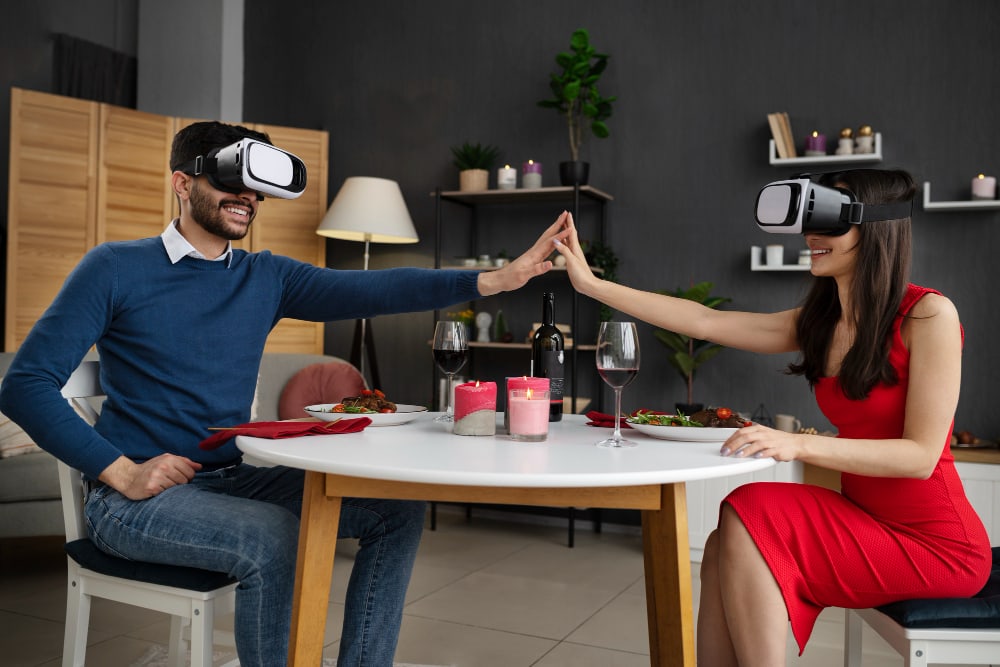
Augmented Reality in Everyday Life: Top Applications Beyond Gaming in 2025
Discover how augmented reality is transforming healthcare, retail, navigation, and industry in 2025. Explore real-world AR applications beyond gaming with practical insights.
Imagine a world where the digital and physical worlds seamlessly merge, allowing information, graphics, and interactivity to overlay directly onto your environment. This is the promise of Augmented Reality (AR)—a technology that enhances reality rather than replacing it. Unlike Virtual Reality (VR), which immerses users in a completely digital environment, AR allows users to remain fully aware of their surroundings while interacting with enriched digital content.
While AR initially captured the public’s imagination through popular games like Pokémon GO, its true potential now spans healthcare, industry, retail, navigation, and education. In 2025, AR is not just a novelty—it’s a practical tool shaping the way we live, work, and interact.
AR in Industry: Hands-Free Remote Support and Efficiency
In industrial settings, AR has revolutionized the way work gets done. From manufacturing plants to complex repair facilities, AR empowers technicians to perform tasks with greater accuracy, efficiency, and safety.
Remote Assistance and Problem Solving
AR enables experts to provide real-time guidance remotely. For example:
- A technician wearing AR smart glasses can stream their point-of-view to an expert located miles away.
- The expert can overlay digital instructions, such as arrows, annotations, or 3D diagrams, directly onto the technician’s field of vision.
- This guidance reduces errors, accelerates problem-solving, and eliminates the need for expert travel.
Assisted Reality for Enhanced Productivity
Assisted Reality (aR) devices are a category of AR smart glasses designed for industrial use. Key benefits include:
- Hands-Free Access: Workers can view instructions, checklists, or diagrams without holding a manual or tablet.
- Durability: Built for harsh industrial environments, with robust construction and long battery life.
- Real-Time Collaboration: AR overlays allow multiple users to interact with the same visual data, enhancing coordination across teams.
Environmental & Economic Benefits
AR reduces travel-related emissions and operational costs. Remote guidance limits the need for experts to physically visit multiple sites, supporting sustainability goals while maintaining productivity.
AR in Healthcare: Transforming Training, Surgery, and Patient Care
Healthcare is one of the fastest-growing sectors for AR adoption, offering life-saving improvements in training, diagnostics, and surgical precision.
Medical Training Reinvented
AR transforms traditional medical education by allowing students to interact with 3D anatomical models:
- Students can explore organs from every angle, simulate procedures, and understand complex systems more intuitively than with textbooks alone.
- Interactive AR experiences accelerate learning and improve retention, preparing medical professionals for real-world scenarios.
Surgical Precision and Planning
AR tools are becoming indispensable in the operating room:
- Pre-Operative Planning: Surgeons overlay 3D reconstructions from CT or MRI scans onto the patient’s body. This allows precise planning of incisions and identification of critical structures.
- Intraoperative Guidance: AR glasses display real-time data, such as vital signs, anatomical overlays, and surgical alerts, directly in the surgeon’s line of sight.
- Remote Assistance: Specialists can join surgeries virtually, guiding local surgeons with live digital overlays, expanding access to high-quality care globally.
Enhanced Patient Outcomes
By combining immersive visualization with precision tools, AR reduces surgical errors, shortens operation times, and improves recovery rates. This creates measurable benefits for both patients and healthcare systems.
AR in Retail: The Try-Before-You-Buy Revolution
Retailers are leveraging AR to bridge the gap between digital and physical shopping, giving consumers more confidence and convenience.
Virtual Product Visualization
Apps like IKEA Place allow users to place true-to-scale 3D furniture in their homes via smartphones:
- Shoppers can visualize whether a sofa, table, or decor fits in their space before making a purchase.
- This reduces the likelihood of returns and enhances customer satisfaction.
Virtual Try-On for Fashion and Beauty
AR is changing the way people shop for clothing and cosmetics:
- Fashion: Brands like Warby Parker let customers try on glasses virtually using their phone or tablet camera.
- Beauty Products: AR apps allow users to experiment with makeup shades, hairstyles, or accessories in real time.
- Confidence & Conversion: Virtual try-ons increase buyer confidence, leading to higher conversion rates and fewer returns.
Personalized Shopping Experiences
Retail AR apps can also recommend products based on user preferences or past interactions, creating a more personalized and engaging shopping journey.
AR in Navigation and Tourism: Smarter Travel Experiences
Augmented reality is revolutionizing navigation and travel by overlaying information directly onto the real world.
AR Navigation
- Walking or driving through complex environments becomes easier with AR overlays.
- Apps display turn-by-turn directions, street names, and points of interest on top of the real-world camera view.
Automotive AR
- AR head-up displays (HUDs) in vehicles project navigation, speed, and hazard alerts onto the windshield, reducing distractions and enhancing road safety.
Tourism and Cultural Experiences
- Tourists can point their phones at landmarks to see historical reconstructions, guided tours, or interactive stories.
- Museums and heritage sites use AR to bring exhibits to life, making learning immersive and memorable.
Ethics and Privacy: Challenges in an Augmented World
As AR devices collect more data about users and their surroundings, privacy and ethical considerations become crucial.
Key Privacy Issues
- Biometric Data: AR devices can track eye movements, facial expressions, and heart rate, revealing sensitive information.
- Bystander Privacy: Cameras on AR devices can unintentionally record people nearby, raising consent concerns.
- Data Security: Users demand transparency, local data storage, and control over who can access their information.
Ethical Adoption
To build trust, AR developers must implement:
- Clear privacy policies
- Opt-in features for data collection
- Secure local storage options
- User-centric design that prioritizes consent and transparency
Addressing these concerns is essential for widespread adoption and public trust.
Conclusion: Stepping Into an Augmented Future
Augmented Reality has moved far beyond its gaming origins. It is now a strategic tool that enhances productivity, learning, shopping, and exploration. AR empowers individuals and industries by delivering relevant, contextual information exactly where it’s needed.
As technology advances, AR will continue to integrate with AI, wearable devices, and IoT, creating a seamless blend of digital and physical reality. The future of AR relies not just on innovation but also on ethical implementation and user trust.
Stay informed about emerging technologies and the impact of AR on our daily lives. Follow this blog for expert insights, practical examples, and the latest trends in innovation and digital transformation.
Related Articles

The Green Revolution: How AI, Sustainable Materials, and New Energy Are Reshaping Our World
Green technology is at the forefront of our battle against climate change. Discover the most promising sustainable innovations of 2025, from carbon capture to circular economies.

Quantum Computing in 2025: Navigating the Triumphs, Threats, and Transformative Roadmap
Quantum computing is poised to revolutionize industries by solving problems currently intractable for classical computers. We explore the state of quantum in 2025.