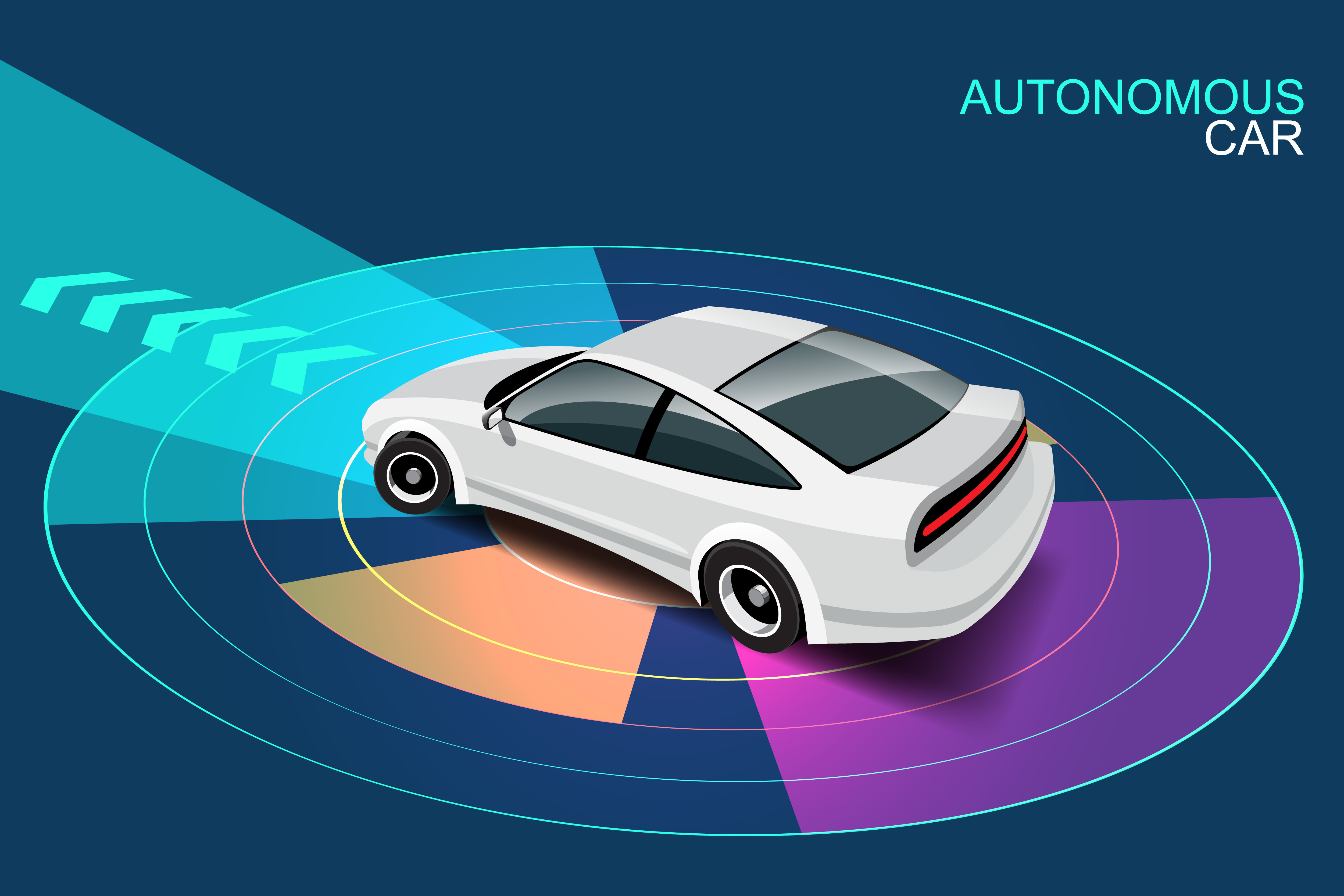
The Future of Transportation: EVs, Autonomous Driving, and Urban Mobility
The transportation sector is undergoing a seismic shift. We dive into the latest advancements in electric vehicles (EVs), autonomous driving, and innovative urban mobility solutions.
The world of mobility is undergoing a radical transformation, moving beyond conventional cars to embrace a future driven by electrification, automation, and digital connectivity. This revolution impacts how we live, commute, and manage our urban spaces, spanning everything from shared autonomous vehicles (AVs) on the ground to advanced air mobility (AAM) in the skies.
Here is an in-depth look at the forces driving this new era, drawing insights from global studies on technology, policy, and urban planning.
Part 1: Autonomous Ground Mobility (AMoD): The Efficiency Revolution
Advanced mobility systems on the ground, known as Autonomous Mobility on Demand (AMoD), promise to fundamentally change traffic patterns and vehicle ownership.
The Power of Sharing
Analysis across ten case studies demonstrated the profound potential efficiency of shared autonomous vehicle (AV) fleets compared to Conventionally Driven Vehicles (CDV):
- Vehicle Reduction: Shared fleets could reduce the number of vehicles required to meet realistic demands by a significant 88%–93%.
- Parking Space Elimination: Correspondingly, the need for parking spaces could be reduced by 83%–97%. Lisbon, for instance, showed that on-street parking could be eliminated entirely, and off-street parking reduced by 80%.
However, this efficiency comes with a trade-off: Vehicle Kilometers Traveled (VKT), or empty miles, could increase by 6%–15% due to vehicles repositioning or moving between customer trips. Fortunately, advanced optimization algorithms and fleet dispatching techniques can mitigate this, reducing the ratio of empty miles by as much as 40%.
Global Race: US vs. China
The deployment of self-driving taxis highlights stark differences in approach between the world’s two largest markets:
| Feature | China (Centralized & Aggressive) | United States (Fragmented & Private) |
| Regulatory Framework | Central government sets clear, nationwide guidelines, accelerating adoption. Approval time is roughly 50% faster. | State-driven regulations create a patchwork of laws, slowing national expansion. |
| Market Leader | Baidu Apollo Go dominates, operating over 700 robotaxis in cities like Beijing, Shenzhen, and Wuhan. | Waymo and Cruise lead, focusing on select, AV-friendly cities (Phoenix, SF, LA, Austin). |
| Scale & Adoption | Autonomous taxi rides surpassed 2 million trips per month in 2023. Shenzhen legalized fully autonomous taxis across all districts in 2022. | Waymo achieved over 1 million driverless rides by late 2023. California is the "proving ground," handling over 60% of US deployments. |
| Cost | Average fare is approximately 30% lower than in the US, supported by economies of scale and government investment in smart infrastructure. | Higher reliance on private funding results in higher costs and slower expansion. |
| Public Perception | High public trust; over 85% of Chinese passengers reported a positive experience in 2023. | 71% of Americans remain skeptical about fully driverless taxis, often due to safety concerns. |
The Social and Ethical Quagmire
The technological focus on AVs often overshadows the crucial social and ethical dimensions—a concept termed sociomobility. Critics note that the existing literature is often auto-centric, treating AVs as an auto issue rather than a broad mobility question.
Key social challenges identified include:
- Equity and Adoption: Adoption is likely to be concentrated among the young, highly educated, and high-income earners, potentially widening existing socioeconomic divides.
- Safety Transition: While AVs promise greater safety by reducing human error, the period when AVs and human drivers share roads remains largely unstudied. Concerns exist that drivers may lose necessary coping skills as AVs handle simple tasks.
- Algorithmic Ethics: AV algorithms are often designed outside the democratic process, raising concerns that AV manufacturers are implicitly encoding society's ethics and risks into the software, including accepting a significant loss in privacy.
Addressing these concerns requires proactive governance. The United Kingdom's Automated Vehicles Act, passed in May 2024, establishes one of the most comprehensive legal frameworks globally, shifting liability for crashes from the driver to the corporation (manufacturer, insurer, or software developer) when the vehicle is in self-driving mode. This move is expected to accelerate adoption, potentially placing self-driving vehicles on British roads by 2026.
Part 2: Advanced Air Mobility (AAM) and the Digital Skies
The concept of flying taxis is no longer science fiction. Advanced Air Mobility (AAM) refers to new technologies, like piloted or autonomous electric vertical take-off and landing (eVTOL) vehicles, designed to provide efficient, quiet, and sustainable aerial transportation for passengers and cargo.
AAM covers local use cases, typically within a 50-mile radius, and intraregional travel, extending up to a few hundred miles, integrating air travel into a connected, multimodal network that spans ground, waterways, and skies.
The City’s Role: Vertiports and Planning
Cities play a crucial role in integrating this new mode of transportation, especially by planning and approving the required take-off and landing areas, known as vertiports. To ensure the smooth integration of AAM into urban environments, digital infrastructure and standardized data sharing are essential.
This is where the Open Mobility Foundation (OMF) and the Mobility Data Specification (MDS) step in.
The OMF is dedicated to helping cities manage emerging transportation technologies and their digital requirements. The MDS is a foundational, free, and open-source tool consisting of APIs that standardise communication and data sharing between cities (public agencies) and private mobility providers.
Adapting Data for the Air
MDS was initially developed to help cities manage the rapid deployment of shared devices, like dockless e-scooters. It is now being adapted for AAM. Key use cases for applying MDS to AAM include:
- Infrastructure Planning: Understanding the best locations for new vertiports, ensuring connectivity with existing ground transportation.
- Safety and Response: Facilitating emergency response, including the quick implementation of no-fly zones during unplanned events or disasters.
- Policy Adherence: Ensuring compliance with policies, rules, and digital boundaries (geofencing).
- Equity: Monitoring deployment and usage in underserved areas to meet equity goals.
Ultimately, leveraging this digital policy—the precise, up-to-date digital exchange of information between cities and operators—is key to managing AAM successfully in complex urban settings.
Part 3: Powering the Mobility Shift: Batteries and Charging
The massive scale-up of Advanced Mobility depends entirely on the electric vehicle (EV) ecosystem—especially batteries and charging infrastructure.
The EV Market Today
Electric car sales are soaring globally, exceeding 17 million in 2024 and securing a sales share of more than 20%. China is the undisputed global manufacturing hub, controlling over 70% of global EV production and 85% of global lithium-ion cell manufacturing operations. The global electric car fleet reached almost 58 million by the end of 2024.
The Battery Chemistry Race
The industry is moving toward a multi-chemistry ecosystem to optimize costs, performance, and sustainability across different vehicle segments.
| Technology | Energy Density (Wh/kg) | Key Applications | Strategic Advantage |
| NMC (Nickel Manganese Cobalt) | 250–300 | Premium EVs, prioritizing maximum range. | High energy density and superior performance. |
| LFP (Lithium Iron Phosphate) | 160–200 | Economy and mid-range EVs, commercial fleets. | Lower cost and exceptional durability/thermal stability. Controls 37% of the global market. |
| Solid-State | 350–500 (projected) | Future premium vehicles (2027–2028). | Theoretical energy densities exceeding 400 Wh/kg and projected 12+ year lifespans. |
| Lithium-Sulfur (Li-S) | 400–550 (projected) | Specialty applications (aviation, premium performance). | Ultra-high theoretical energy density and elimination of nickel, cobalt, and manganese. |
| Sodium-Ion | 160–200 | Economy EVs, short-haul commercial applications. | Eliminates dependency on critical minerals (lithium, nickel, cobalt). |
Intense competition, particularly in China (where prices dropped nearly 30% in 2024), drove global lithium-ion battery pack prices down by 20% in 2024. However, experts warn that supply constraints for critical minerals like lithium and nickel might materialize by 2030, despite current low prices.
Expanding Charging Infrastructure
Widespread adoption hinges on robust charging infrastructure. Globally, the stock of public charging points has doubled since 2022, reaching over 5 million in 2024. China accounts for about 65% of this stock.
Key trends in charging include:
- Fast Charging: The global stock of ultra-fast chargers (150 kW or more) grew by over 50% in 2024. Innovations in battery technology now enable charging speeds comparable to conventional refuelling times, provided ultra-high-power infrastructure is deployed.
- Grid Integration: Smart charging (managed scheduling) and Vehicle-to-Grid (V2G) technologies are critical. V2G involves bi-directional charging, allowing EVs to discharge power back to the home or grid, utilizing electricity when it is cheapest (like during midday solar peaks) and providing grid flexibility. Over 30 bi-directional capable models are available today.
- Alternative Charging: Battery swapping is proving especially successful for commercial applications like delivery services and two/three-wheelers (2/3Ws) in emerging markets like India and China, reducing downtime and lowering upfront costs for consumers.
The Bottom Line for Heavy-Duty Vehicles
For commercial fleet operators, the Total Cost of Ownership (TCO) is the primary metric. Electric heavy-duty trucks (HDVs) are significantly more energy efficient than diesel equivalents (BEVs are about 55% more efficient).
The TCO analysis, assuming a 500 km daily driving distance, shows that falling purchase prices and lower running costs are tipping the scales:
- China and Europe: Battery electric trucks are projected to become cost-competitive with diesel trucks by 2030.
- United States: The TCO gap narrows substantially, achieving parity around 2030.
Crucially, the utilisation rate of charging infrastructure drastically affects the overall fuel costs for BEVs; increasing charger utilisation from 5% to 30% can cut the infrastructure cost per kWh by about 80%.
Conclusion: Planning for a Multimodal, Digital Future
The future of mobility is a dynamic tapestry woven from disruptive technologies: AAM redefines urban travel speed, AMoD optimizes ground efficiency, and battery innovation sustains the entire electric movement.
As public agencies prepare for this future, two key learnings emerge:
- Digital Policy is Essential: Tools like MDS provide the necessary "common language" for public agencies to communicate rules and integrate complex systems like AAM, prioritizing safety, equity, and sustainability.
- Societal Impact Cannot be Ignored: While technology promises incredible efficiencies (reducing vehicles and parking), planners must actively mitigate unintended consequences, such as widening socioeconomic inequalities or outsourcing ethical decisions to unregulated algorithms. Planning must move beyond auto-centric views to focus on total mobility solutions, actively seeking public input to build trust and ensure safety.
The ability of cities, industry, and regulators to adapt swiftly and collaboratively will determine whether this mobility revolution delivers on its promise of safer, cleaner, and more efficient urban life.
Related Articles

Future-Proofing the Metropolis: IoT Strategies for Urban Resilience and Cybersecurity
Smart cities use IoT devices and data to improve the quality of urban life. We look at how connected technology is making cities more efficient, sustainable, and responsive.

Beyond Lithium-Ion: Why Cheaper Sodium Batteries Are the True Future of Sustainable Grid Storage
Beyond lithium-ion, a new generation of battery technologies is emerging. We explore the innovations set to power everything from EVs to grid-scale energy storage.